Filed under: Sri Lanka

Maxie Leonard was from Sri Lanka. What little I have been able to find out about him was from his nephew’s YouTube channel. He apparently released a few singles and dies roughly 20 years ago. But that’s it.
If you have any further information about these artists or anything else about this recording, please leave it in the comment section below.
Catalog number S. S. 31 on Saraswathi Record of Columbo, Sri Lanka, released 1974.
Filed under: Morocco

♬ Elli Yachak Ezin / اللي يعشق الزين
Haim Abitbol / حايم بيطبول – also seen as Botbol – was a Jewish singer born in Fez, Morocco in 1936. His father Jacob Abitbol was a leader of the malhun musical tradition in Fez. The family name Botbol / Abitbol means “father of the drum” in Darija.
As a young performer, he excelled in various styles, from aita and chaabi to Gharnati and raï. He was a multi-instrumentalist, but excelled with the oud and bendir. With his family – including his father, his brother Marcel on the violin, and his brother Claude on percussion – he formed an ensemble performing classical works and poetry. From 1950, he formed a duo with the Algerian Salim Halali, covering a number of Maghrebi classics. In the 1960s, he incorporated various influences into his music, including malhun, gnawa, salsa, reggae, and funk.
“Elli Yachak Ezin” is a cover of the Spanish rumba “El Porompompero“, first recorded by Manolo Escobar y Sus Guitarras in 1960.
Catalog number MB 281 on Boussiphone of Morocco. No release date listed.
Filed under: Vietnam

Băng Châu was born Nguyễn Thị Xuân Mai on August 1st, 1950 in Bà Rịa which at the time was in the Indochinese Federation – now Vietnam.
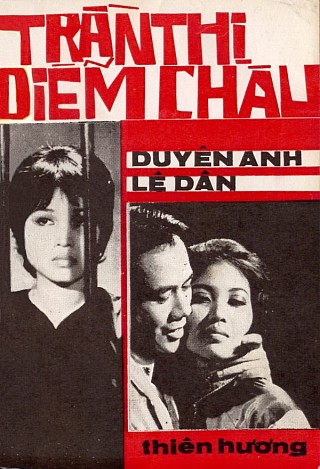
In 1969, Bang Chau dropped out of school and went to Saigon. She got her break into show business working with Duy Khánh – who she was rumored to have had an affair with. Her biggest hit was “Qua Cơn Mê” / “Through the Coma” which was written by Trịnh Lâm Ngân. In 1971, Băng Châu starred in the movie Trần Thị Diễm Châu directed by Lê Dân making a big debut in Saigon cinema.
If you have any further information about this artist or anything else about this recording, please leave it in the comment section below.
No catalog number or release date listed. Released on Bón Phương of Glendale, California.
Filed under: Togo

During the years that they were active, Togo’s Orchestre Abass only released five singles. With the three additional unreleased tracks that are on Analog Africa’s “De Bassari Togo” LP, that is a total of 13 songs they recorded. – and most of them are killer. – especially the songs that were released on Polydor of Ghana.
The band was led by Malam Issa Abass who played guitar and organ. This song – which is the B side to “Honan” – is led by one of the band’s songwriters Thon A. Komlan.
Catalog number DC N° 2 on Disques Chic of Dahomey – now Benin. No release date listed.
Filed under: Chile

♬ Amarte Amarte Una Vez Mas / No Me Marcharé
I first became aware of Sergio Del Rio y Su Conjunto on the Sublime Frequencies release “Latinamericarpet: Exploring the Vinyl Warp of Latin American Psychedelia Vol. 1”. Given my love of steel guitar music – especially music that is neither County nor Hawaiian – I knew I had to track this record down.
But, the only thing harder than finding this record is finding any information about it. There is no information on the record sleeve. And, to the best of my knowledge this appears to be their only release. If you have any further information about these artists or anything else about this recording, please leave it in the comment section below.
Catalog number LDC-36837 on Odeon of Chile, released 1973.
Filed under: Afghanistan

♬ Tu Adjab Balaee / تو هجب بلائی
Muhammed Zahir Howaida / ظاهر هویدا was born in the Waras district of Afghanistan on February 28th, 1945.
Upon graduating high school, Zahir attended the Institute of Theatre and Arts of Kabul and joined the Kabul Armature Orchestra, He earned a scholarship to learn operatic and eastern classical music at Moscow State Tchaikovsky Conservatory in Moscow, Russia in 1966. After leaving Moscow in 1972, Zahir spend time in Tehran, Iran. There, he performed the song “Kamar Bareek-e-Man” / “کمر باریک من” which became an instant hit in that country.
Many of Howaida’s songs are political in nature and anti-establishment. He often spoke out against the monarchy and the first president of the Afghan republic, Mohammad Daoud Khan / محمد داود خان. After the fall of the republic of Afghanistan into the hands of the Marxist communist regime, Howaida found many opportunities on National Television and Radio Kabul. He recorded most of his songs during this tenure, hosting a variety of shows on both mediums. After the fall of the communist government, Zahir and his family fled to Hamburg, Germany. He passed away on March 5th, 2012.
Catalog number ۲۸۳ on Pars Record of Iran. No releases date listed.
Filed under: Bhutan

♬ 1.25 NU – Bhutan History (English)

♬ 3 NU – a) Royal Bhutan Anthem b) Bhutan History (Bhutanese) c) Folk Song (No. 1)


♬ 9 NU – a) Bhutan History (English) b) Folk Song (No. 1) c) Folk Song (No. 2)

♬ 10 CH – Bhutan History (Bhutanese)

Whereas the items displayed above may look like records – and they will play on a turntable – they are actually postage stamps from the Kingdom of Bhutan / འབྲུག་རྒྱལ་ཁབ.
The story of these stamps starts in Pittsburgh, PA. That is where a man by the name of Burt Kerr Todd was born. Years later, while attending Oxford University, he befriended Ashi Kesang Choden-Dorfi, the future queen of Bhutan. In 1951, Choden-Dorfi invited Todd to Bhutan for her wedding to King Jigme Dorji-Wangchuck. There were no airfields in Bhutan, and few roads, so Todd had to travel much of the way from India on foot and horseback. His account of the journey appeared in the December 1952 issue of National Geographic magazine. He claimed to be the first American to visit Bhutan, but that cannot be verified.
During his visit, Todd was asked by the Bhutanese authorities to explore the printing of their own postage stamps and joining the Universal Postal Union. The Bhutan stamp program was set up specifically to raise money for the improvement of Bhutan’s infrastructure after the country was refused a loan from the World Bank. Todd set up the Bhutan Stamp Agency in Nassau, Bahamas. He had little grasp of how stamps were marketed through the philatelic trade and therefore relied on unusual designs to attract publicity. At first ignored by many collectors, some early Todd stamps have become cult items.
In 1966, there was a series of triangular stamps featuring the yeti, the Himalayas’ fabled abominable snowman. In 1967 came a set of 3D stamps on the theme of the space exploration. Other successful issues included a set of Buddhist banners printed on silk, a set of traditional sculptures die-stamped in plastic, perfumed stamps and stamps made out of steel foil. In 1972, Todd got the idea to make “talking stamps”. These tiny records – possibly the smallest vinyl records that can still be played with a stylus – have an adhesive backside to affix to either a letter to postcard.
Although there is no information about the performers on these recordings, apparently Burt Todd is the person doing the English narration of the Bhutanese history.
Released 1973 by the Bhutan Stamp Agency of the Royal Government of Bhutan.
Filed under: Madagascar

♬ Kamo Aho
Simon Randria recorded five singles for the Malagasy record label Discomad during the 1970s.
If you have any further information about these artists or anything else about this recording, please leave it in the comment section below.
Catalog number 466 721 in Discomad Records of Madagascar, released 1975.
Filed under: Turkey

Born on March 1, 1938, in Istanbul, Önder Bali studied at the Istanbul Conservatory and started his professional music career in 1961 by playing the clarinet in the Istanbul City Orchestra. Later, he played wind instruments in the orchestras of Erol Büyükburç, Ertan Anapa, Şevket Uğurluer and Yalçın Ateş.
In 1969, he formed the Önder Bali 4. He played organ and clarinet, Zafer Dilek on guitar, Haluk Hancı of Mavi Çocuklar on bass and Erdal Gürel on drums. Between 1970 and 1973, they recorded four singles before the quartet went their separate ways and Zafer Dilek starting his solo career.
Catalog number YCA-019 on Yonca Records of Turkey, released 1970.
Filed under: Malaysia

Hussain Marican and Betty Ismail were from Malaysia. Hussain Marican recorded at least 16 singles and an album. Betty Ismail released 7 singles. They released two singles together. And that is all of the information I could find.
If you have any further information about these artists or anything else about this recording, please leave it in the comment section below.
Catalog number RE 121070 Royel (sic) Record of Malaysia.
 Radiodiffusion Internasionaal Annexe